


Owning an older home has its charm, but also unique electrical fire risks. Overlooking these risks can be dangerous. Understanding them is crucial for safety. This post explores common electrical hazards in older homes and how to mitigate them. Electrical safety is paramount, so let’s dive in.
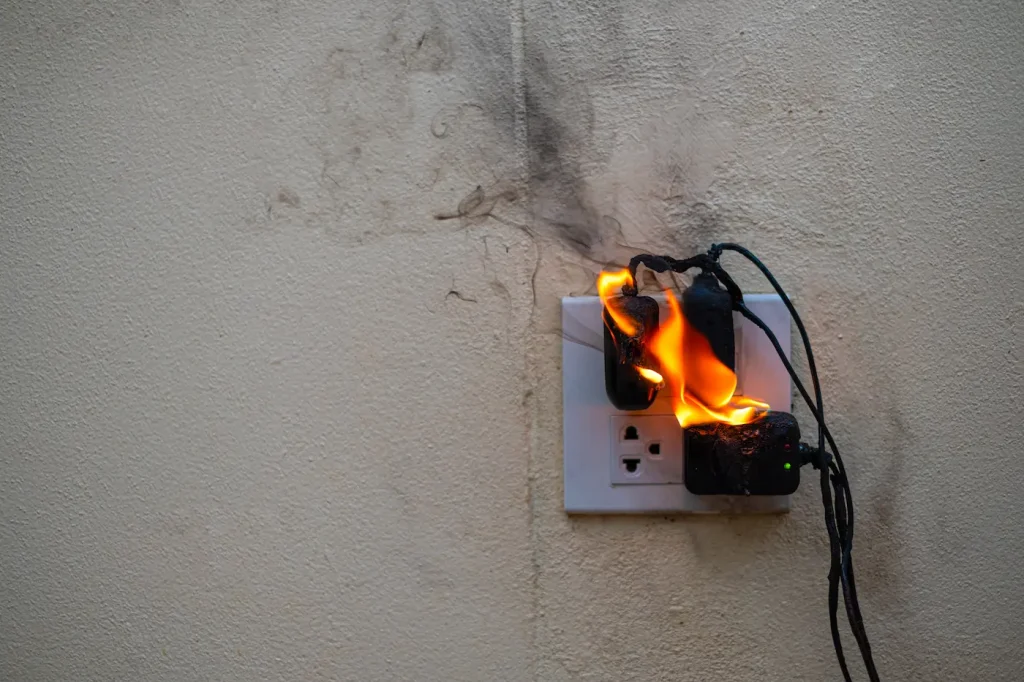
Electrical Fire Risks in Older Homes: Why They Happen
Older homes weren’t built for today’s electrical demands. Modern appliances and electronics strain aging wiring. This strain creates hidden issues and increases fire risks. Outdated electrical components might not meet today’s energy efficiency standards.
Outdated Wiring
Many older homes have knob-and-tube wiring, which lacks grounding. This increases the risk of shocks and fires. Even updated systems with ungrounded, three-prong receptacles pose dangers. This mix of old and new wiring creates problems.
Overloaded Circuits
Too many devices on one circuit overload it and overheat wires. This creates fire risks inside walls. Faulty appliances and electronics contribute to about 30% of electrical fires. Distributing the load across different outlets enhances safety.
Aluminum Wiring
Homes built in the 1960s and 1970s sometimes used aluminum wiring. Aluminum wiring can corrode, causing poor connections and increased resistance. Excess heat ignites building materials, elevating fire risks.
Faulty Electrical Panels and Circuit Breakers
Older electrical panels struggle with modern power needs, creating fire hazards. Untrained homeowners attempting electrical work often create more problems. These hidden issues require a trained electrician to fix.
Faulty circuit breakers may not trip, causing wires to overheat. This poses a potential fire hazard. Damaged circuit breakers could potentially ignite nearby wiring.
Identifying and Mitigating Electrical Hazards in an Older Home
Now, let’s explore solutions for these common electrical hazards. Proactive maintenance and updates are key for safety. Regular electrical inspections by a qualified electrician identify hazards. Schedule regular electrical inspections for peace of mind.
Regular Electrical Inspections
Schedule inspections every 2-5 years. A qualified electrician can assess electrical systems and recommend upgrades.
Replacing Outdated Wiring and Components
Replace knob-and-tube or aluminum wiring with modern, grounded wiring. Update the electrical panel and circuit breakers.
Installing Arc Fault Circuit Interrupters (AFCIs)
AFCIs trip at the first sign of sparking or wire degradation. Install AFCIs in bedrooms and high-risk areas.
Arc faults cause over 35,000 home fires yearly, according to the National Fire Protection Association (NFPA). AFCIs reduce these dangers. Check the National Electrical Code for requirements.
Ground Fault Circuit Interrupters (GFCIs)
Older homes often lack grounding, creating safety risks. GFCIs protect against shock, especially around water. Install GFCIs in bathrooms, kitchens, garages, and outdoors.
Addressing Overloaded Circuits
Watch for hot outlets or burning smells, indicating overloads. Reduce the electrical load on overloaded circuits. An electrician can identify overloaded circuits and offer solutions.
Smoke and Carbon Monoxide Detectors
Fire hazards can still occur, so smoke and carbon monoxide detectors are essential.
Install smoke detectors on every level and near bedrooms. Add CO detectors for added safety. Detectors mitigate harm from undetected emergencies. CO is dangerous in older homes with outdated appliances.
Electrical Safety Tips for Older Homes
Besides professional electrical work, homeowners can take further safety steps. Addressing appliances, extension cords, space heaters, and lightbulb safety is important. Taking these extra steps ensures disaster safety and prevents holiday safety hazards.

Appliance Safety
Plug major appliances directly into wall outlets, not extension cords. Replace frayed appliance cords immediately.
Extension Cord Safety
Inspect extension cords regularly for damage. Replace frayed cords immediately. Don’t chain multiple power strips together.
Avoid overloading extension cords. Minimize the use of power strips and extension cords. Check for overloads regularly.
Space Heater Safety
Use properly sized extension cords for space heaters. Consult an electrician for appropriate circuit and cord sizes.
Never leave space heaters unattended, especially near flammable materials. Safe work practices around space heaters are crucial. Follow overhead powerline safety measures.
Light Bulb Safety
Use correct wattage lightbulbs for fixtures. Check fixture labels for wattage recommendations.
Conclusion
Electrical fire risks in older homes are serious. Awareness, inspections, and preventative measures make a difference. Invest in AFCIs, GFCIs, surge protective devices, and tamper-resistant receptacles. Simple safety practices minimize risks. Educate yourself about these risks and keep your older home safe.
Contact a licensed electrician for expert advice. They can help bring your older home up to code. Prioritize safety and address electrical fire risks promptly.
Contact us today for more information or to schedule a free consultation.